

This article was updated in 2026.
Alsace is the region I once only connected with history lessons and dates described as „Alsace taken by Germany” or „Alsace given back to France”. From XVIIth century till the end of II World War the region went from French to Germans and back six times!
Till now German influence is clearly visible in Alsace – in the cuisine, architecture, beer and white wine produced from grapes popular in Germany. It’s also visible in the local Alsatian language which doesn’t sound like anything I heard before. It does sound much more German than French, that’s for sure. In Strasbourg itself names of many streets and places are given in two languages – Alsatian and French.
I have a friend in Alsace and during my first stay there we went to the capital of the region. Check out what we did during a trip to Strasbourg.
If you plan to visit Paris too, I have you covered! Check my full guide to spending a weekend in Paris.
Strasbourg – interesting facts and practical information
Strasbourg is the capital of the Alsace region in eastern France, located near the German border on the Rhine River. The city itself has about 290,000 inhabitants, while the wider metropolitan area counts more than 800,000 people.
For centuries Strasbourg has stood at the crossroads of French and German cultures. The city changed hands multiple times between the two countries, which is still visible today in its architecture, cuisine, and local traditions.
The historic city centre, known as the Grande Île, was added to the UNESCO World Heritage List in 1988. It is one of the best-preserved medieval old towns in Europe, full of narrow streets, canals and traditional half-timbered houses.
Strasbourg is one of the key cities of European institutions. It hosts the seats of the European Parliament, the Council of Europe and the European Court of Human Rights.
Public transport in Strasbourg is efficient and easy to use, with an extensive tram and bus network. Tickets can be purchased at ticket machines at tram stops or via mobile apps.
The city is famous for Alsatian cuisine, which blends French and German culinary traditions. Local specialities include tarte flambée (flammekueche), choucroute garnie, and wines from the nearby Alsace vineyards.
Where to stay in Strasbourg? Recommended districts
Strasbourg is quite compact, so many neighbourhoods allow you to explore the city on foot. The main differences between areas come down to atmosphere, prices, and proximity to major attractions. The most recommended areas to stay are Grande Île, Petite France, Krutenau, and Neustadt.
*this article contains affiliate links
Grande Île (Historic Centre)
The best location for a stay in Strasbourg for short city-breaks, especially if you only have one day. It’s also perfect for first-time visitors and travellers who want to explore everything on foot.
Why stay here:
- Located in the heart of the city listed as a UNESCO World Heritage Site
- Walking distance to the main attractions such as the cathedral, squares, and canals
- Classic Alsatian atmosphere with colourful half-timbered houses and cobbled streets
Downside:
Accommodation can be expensive, and the area gets busy in peak season (especially during the Christmas market).
Petite France
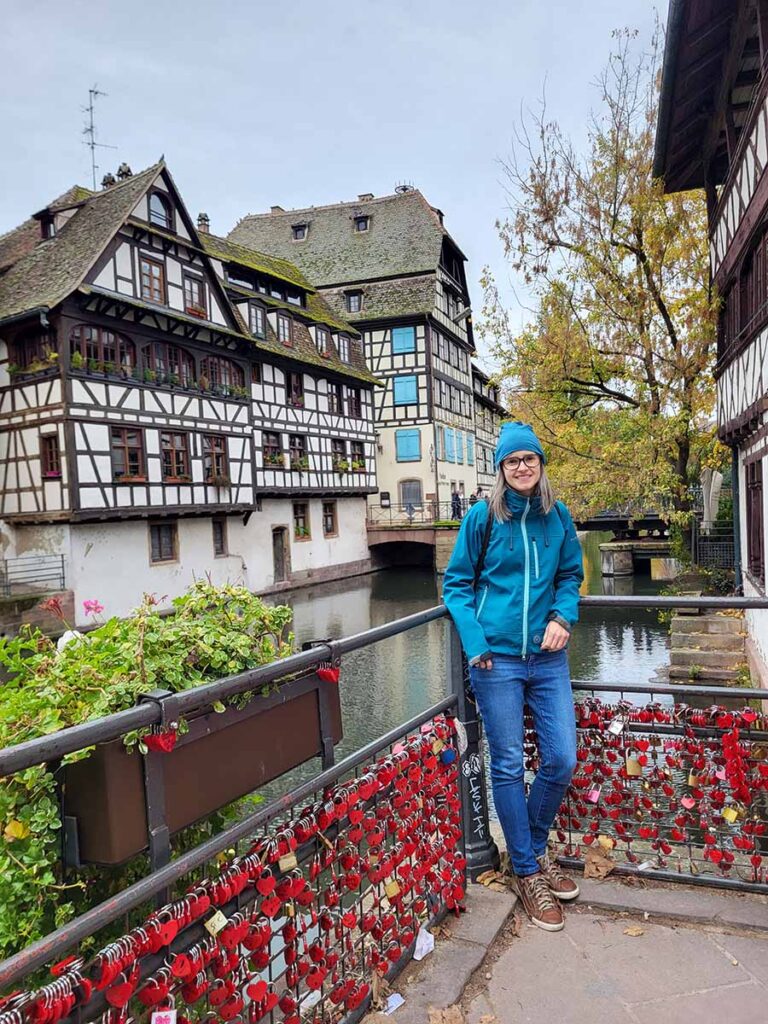
The most picturesque part of Strasbourg, perfect for couples on a romantic getaway and Romantic trips travellers who want the most scenic part of the city right outside their door.
Why stay here:
- Beautiful canals and historic bridges
- Charming former fishermen’s houses
- Excellent restaurants along the water
Downside:
Very touristy and often the most expensive area.
Krutenau
A lively neighbourhood with a local vibe, great for food lovers and travellers who enjoy a more local and relaxed atmosphere.
Why stay here:
- Accommodation is often more affordable than in the historic centre
- Still within walking distance from the most important sights
- Plenty of cafés, restaurants, and bars
- Young, student-friendly atmosphere thanks to the nearby university
Neustadt
An elegant district, less touristy, closer to the European institutions – for travellers looking for a quieter stay.
Why stay here:
- Convenient location between the historic centre and the European institutions
- Impressive architecture from the German imperial period (19th century)
What to do during one day in Strasbourg?
1. Cathedral of Our Lady of Strasbourg (Cathedrale Notre Dame de Strasbourg)

The Cathedral is one of the examples of connecting styles – German and French gothic architecture. You can’t miss it during your trip to Strasbourg.
For two centuries the tower of the cathedral was the tallest church tower in the world. In preliminary project the cathedral was supposed to have two towers but eventually only the northern one was finished. It’s not clear why – probably the city ran out of money and gothic architecture stopped being popular.
There was plenty of time for architectural trends to change – the cathedral was being built for three centuries! Because of that the cathedral is not symmetrical and personally I think it makes it more interesting.
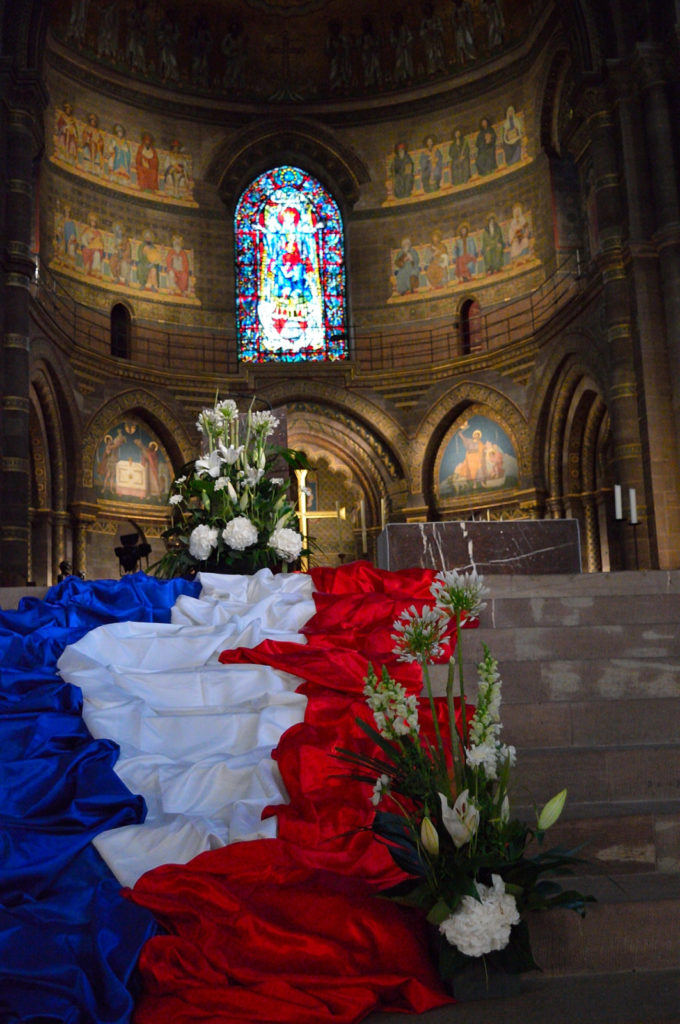
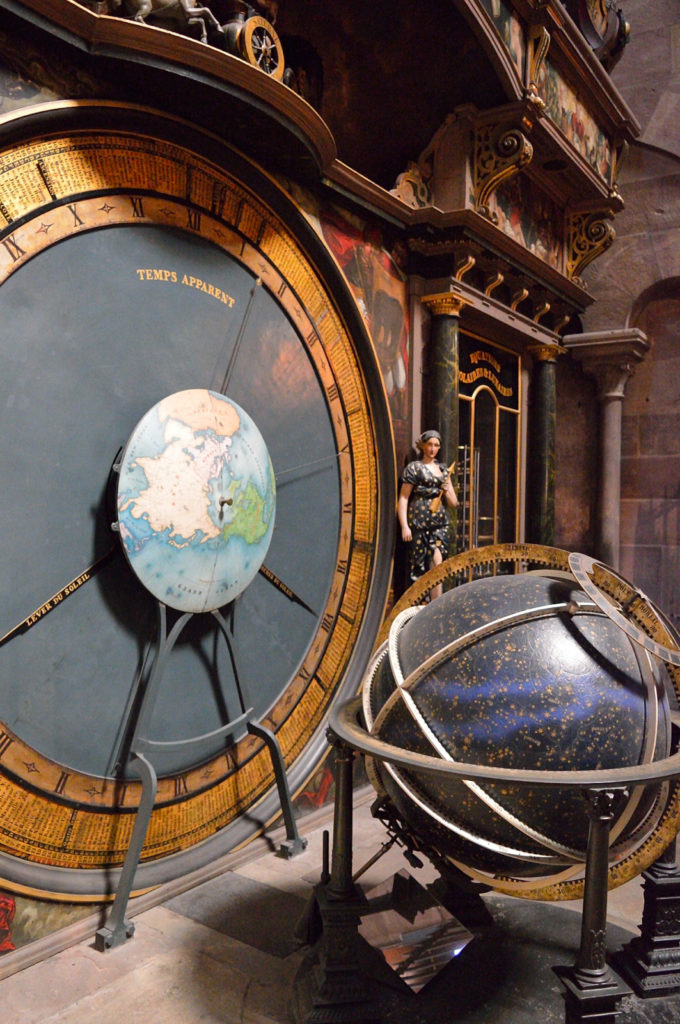
The inside is surprisingly simple and not very decorative but there is an interesting renaissance astronomical clock, a technological masterpiece of these times. It’s 18 meters high, which makes it one of the biggest in the world.

2. Cathedral’s viewing platform
It’s worth climbing 330 steps, get on cathedral’s viewing platform and have a look on Strasbourg from 66 meters high. The entrance to the platform costs 5 EUR.
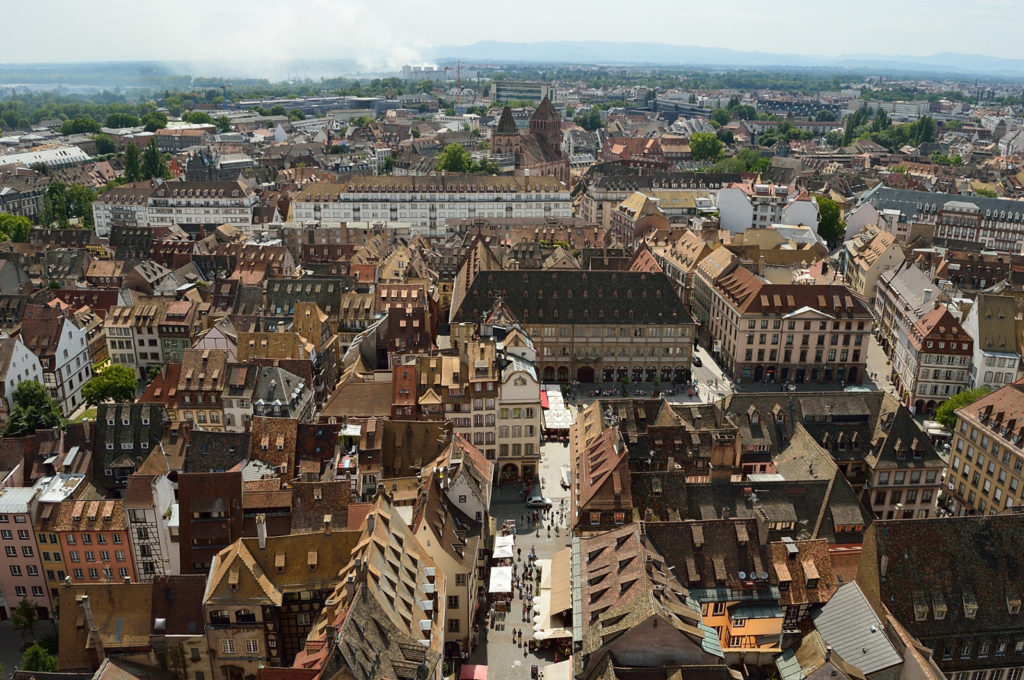
3. Little France (La Petite France)

From the Cathedral walk along the river Ill towards a famous district called Petite France (Little France). The district’s name has an interesting and surprising history. Apparently, it doesn’t originate from the architecture, the inhabitants aren’t particularly patriotic either.
In XVth century there was a hospital in the district which cured people with syphilis – a so called “French disease”.
The district also used to be full of tanneries and it was also called “the tannery district” even though fishermen and millers worked here as fell.
Whatever its history, trust me – the district is enchanting.
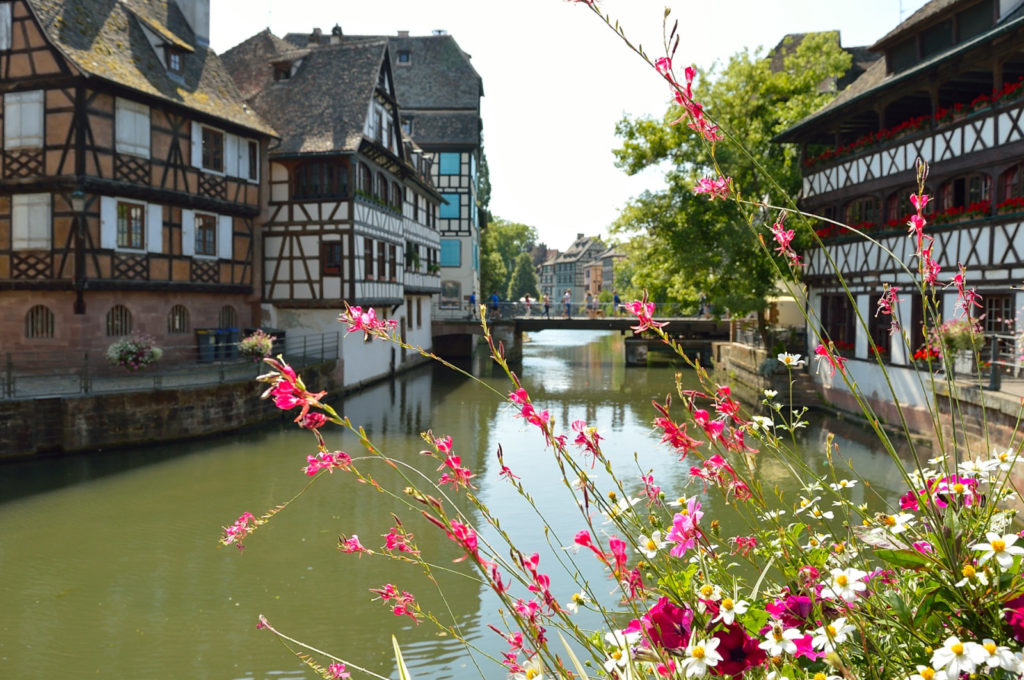
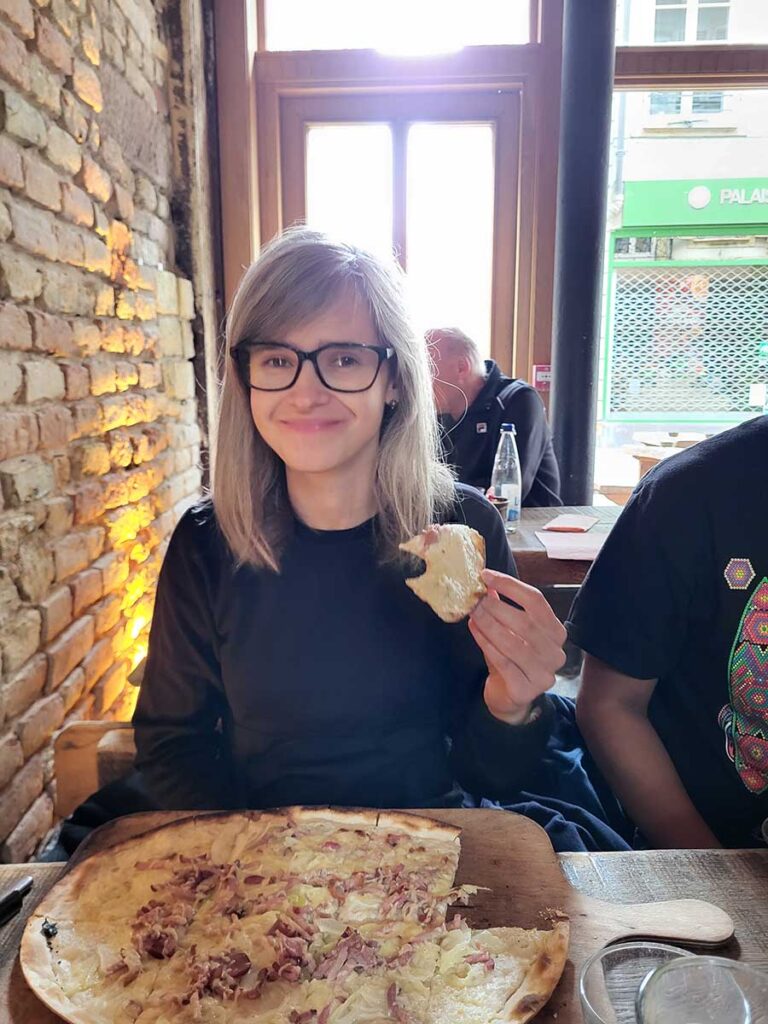
Petite France is a great place to rest in one of numerous small restaurants and enjoy a glass of Riesling – white wine produced in Alsace. Also make sure to try the famous Alsatian dish – tarte flambée (flammkuchen). Your one day in Strasbourg won’t be complete without trying them!
If you feel like tasting more wine, check wine route in Alsace or visit Lyon, France!

4. Place Kleber
The main and biggest square of Strasbourg city center. It is named after Jean-Baptiste Kleber – French talented and successful general from the times of revolution. He supported Napoleon in his campaign in Egypt and he got assassinated in Cairo.
On the Square itself you will find a monument of Kleber – as well as many historical buildings. One of them is L’Aubette which used to serve as military building. It’s been restorated and re-decorated and some call it “The Sistine Chapel of abstract art”. Currently a part of it became a luxury shopping mall.
If you plan your trip to Strasbourg around Christmas time, you will have an opportunity to see one of the largest natural Christmas trees in Europe. It is placed every year on Kleber square. I’ve seen it in 2019 and it is over 30 meters – impressive!!
5. Park L’Orangerie
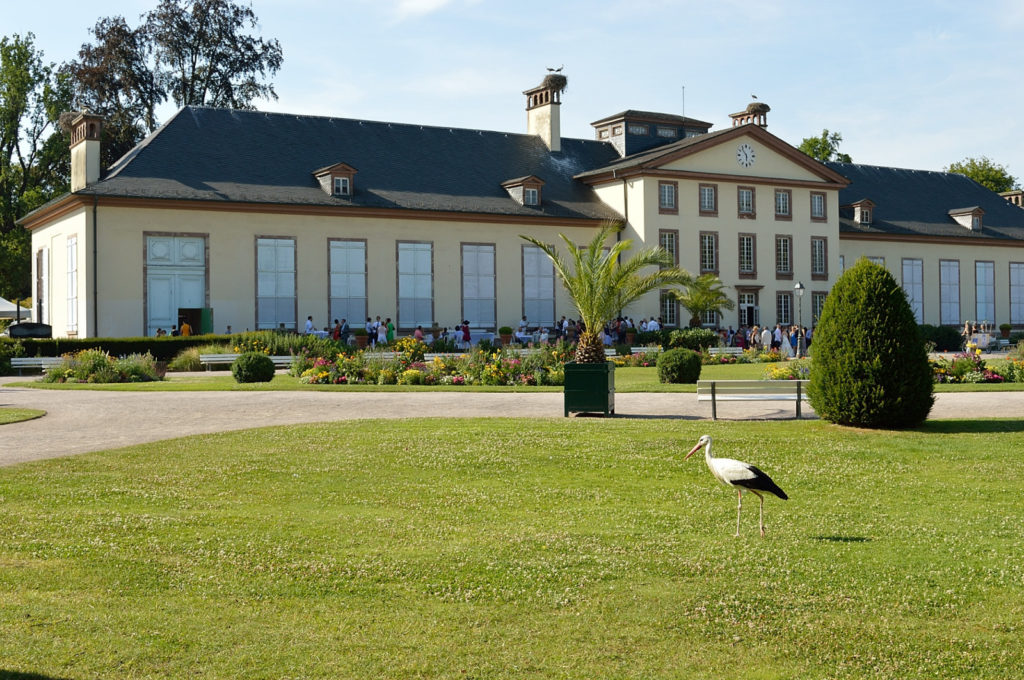
From the city center you can take a tram to the park called l’Orangerie. I recommend you to go there because it’s home for so many storks!
A stork is one of the symbols of Alsace. When I first heard about it, I laughed. A stork is a Polish symbol, what can French people know about them?
But I was wrong. For my whole life in Poland I haven’t seen so many storks as during four days in Alsace.
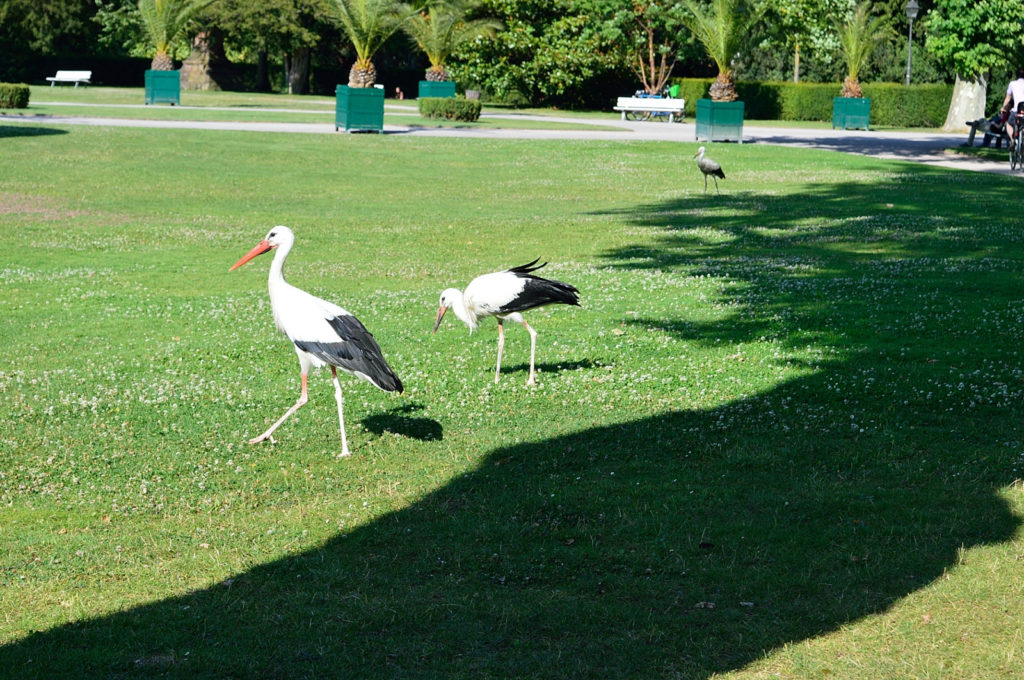
In the Parc de l’Orangerie you can see a lot of them. They are sitting in their nests, walking around, flying over visitors’ heads. I heard that you can see them even in winter because a many lost their instinct to migrate to Africa.

We spent a lot of time in l’Orangerie – resting and chasing the storks with the camera 🙂 They made my day fun and they definitely can improve your trip to Strasbourg too.
6. European Parliament
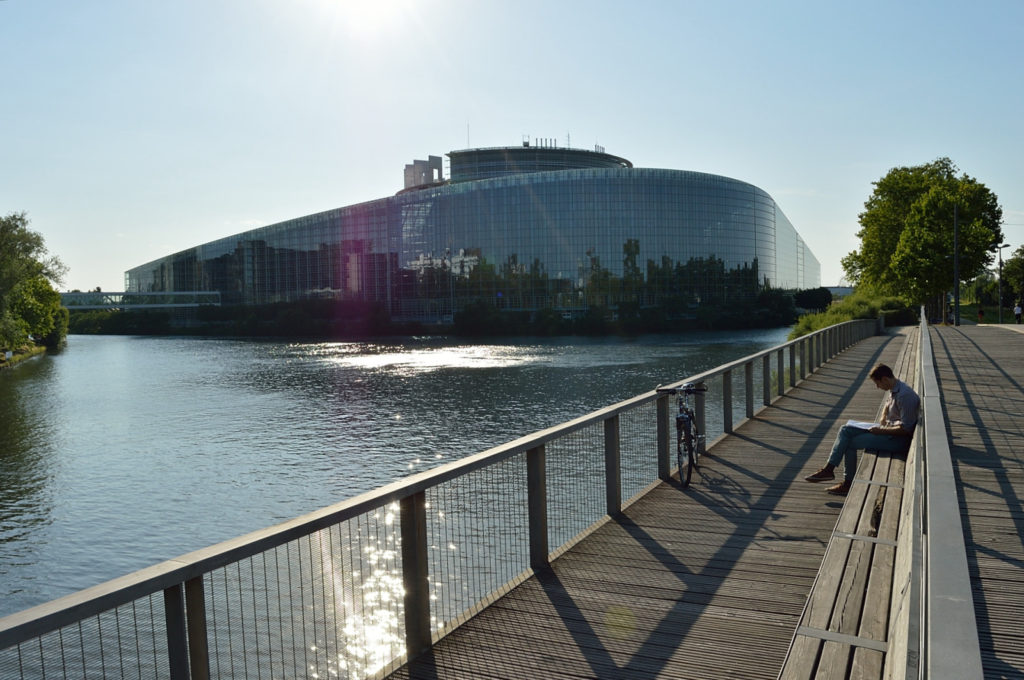
L’Orangerie is located close to the European Parliament so you can see the building on your way back to the center. Strasbourg is officially the parliament’s headquarters and at least twelve sessions a year take place here. Even though most of the proceedings take place in Brussels, whenever the European Parliament votes, they do it in Strasbourg.

You can visit the parliament inside too. You will find all necessary information on the website here. Remember to book your visit in advance.
7. Light show on the Notre Dame Cathedral’s walls

Me and my friend planned to stay in Strasbourg till late evening due to light shows on the cathedral walls in July, August and September. We were waiting for it in a cute restaurant in front of the cathedral. Still impressed with what I saw in the park, I chose a place called La Cigogne – a stork 🙂

The show itself is displayed on the side wall of the Cathedral at Castle Square (Place Du Chateau) few times every evening. The front facade is also illuminated from the first show to the last. Exact time of the shows varies depending on the month, and you can check it on the website here.
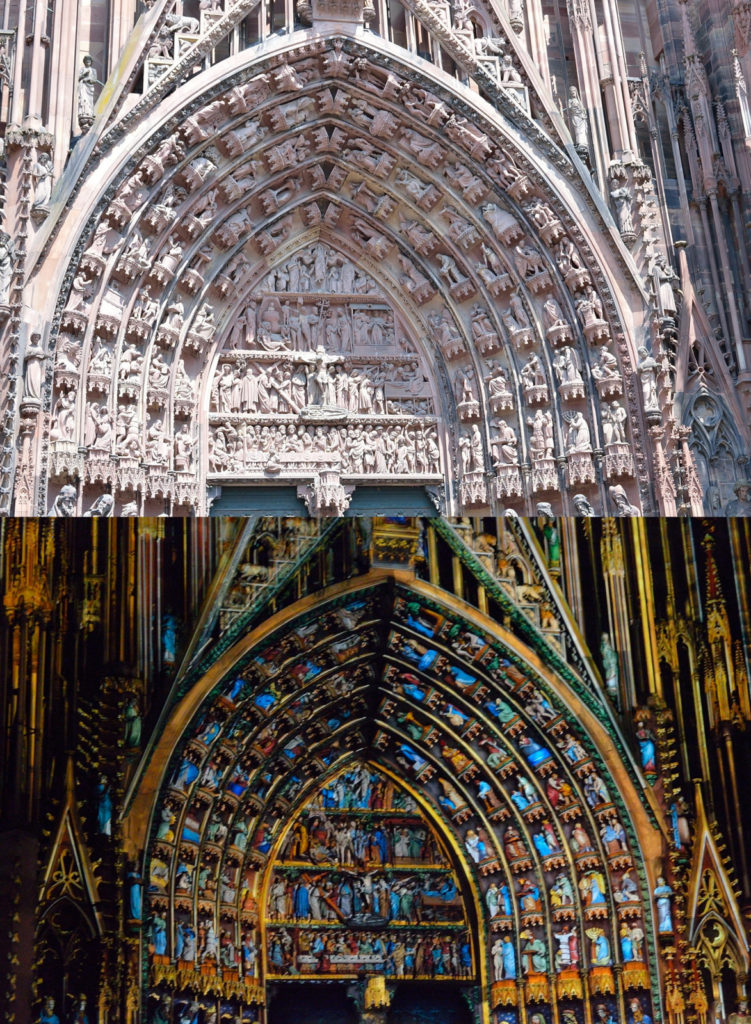
If you’re still planning your trip to Strasbourg, the show is so spectacular, consider going there in the summer just because of it. I was there just when they celebrated the Cathedral’s millennium and the show referred to the Cathedral’s construction. I would gladly see it again.
Spring and autumn will be a good time to avoid crowds.
8. Christmas Market
Update: I’ve visited Strasbourg for the second time in December for the Christmas markets. It was absolutely beautiful with all the decorations, lights, mulled wine, and warm, tasty crepes all around. However, it was extremely crowded!
Much more than I expected, and way more than during the summer four years before.
9. Strasbourg Museums
If you have more time or you tick everything off the above list quickly enough, go to the Alsatian Museum. It’s interesting and gives you a great lesson of the region’s complicated history.
You can find the list of all museums in Strasbourg with opening hours on the website here.
If you’re staying more days in the area I strongly recommend you to visit the wineries and cute villages surrounded by it. Read about my trip to Kaysersberg – favorite village of French people. You can also take a trip around wineries directly from Strasbourg. Click the button below to see the options! 🙂
Accommodation in Strasbourg
So you’ve planned everything for your one day in Strasbourg, now it’s time to book your accommodation. Don’t worry, I’ve done that for you too 🙂 Here are some great options from different price ranges.
Remember that booking your accommodation after clicking links in this article doesn’t change anything for you – but means a lot for me. You will pay the same but instead of giving it all to booking.com team, a little chunk of it will go to me for the hard work and time I spend developing this place for you 🙂 So thank you in advance! 🙂
City Résidence Strasbourg – affordable option in a convenient location – right next to the train station and walking distance from the main attractions in the city center. Good if you’re coming to Strasbourg on a budget.
Aparthotel Adagio Access Strasbourg Petite France – affordable place with lovely, well-designed rooms. It is close to the famous and cutest district La Petite France 🙂 You can also get here on foot from the train station
Hôtel Roses – a cute hotel with all rooms being dedicated to specific kinds of roses 🙂 Perfect location, good price and friendly staff.
EtC Hotel – Great value for your money 🙂 A hotel located in the very heart of Strasbourg enabling you to use your limited time the most efficiently. Enables you to get everywhere on foot or make a stop for a rest during the day.
Life Renaissance Strasbourg A place for you if you want to treat yourself with a little luxury. Beautiful appartments on the main square of Strasbourg. Rooms with balcony overlooking the square. One of the best deals you can get in the city 🙂
One day in Strasbourg is not enough to see everything but this plan will let you use your time in the best way. You will see the cathedral – the symbol of the city, cute architecture specific for this region, you will taste local wine and cuisine, you will meet a stork and see the parliament.
I had enough time to feel enchanted 🙂
Again, while in Alsace, don’t miss cute little towns surrounded by vineyards. I honestly fell in love with Kaysersberg. You can also hike in Alsace. No, not in the Alps! 🙂 Check this stunning hike around three lakes in the Vosges.
If you’re planning to go to Paris too, check out my Paris Trip Planner with all practical information you need and my full guide to spending a weekend in Paris.
If you liked this post please use the buttons below and share it on Facebook, Twitter, or pin it on Pinterest! Thanks! 🙂
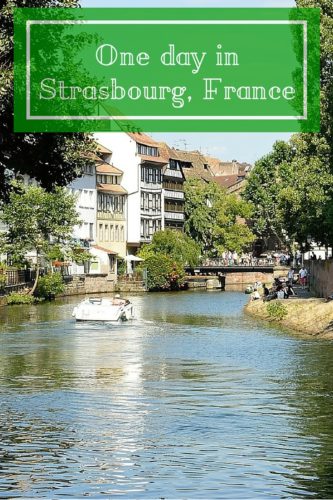
[…] in Alsace, don’t miss its biggest city – Strasbourg, which surprised me positively during my trip two years ago! […]
[…] you won’t feel like leaving them, ever! Visit the biggest city of Alsace too, spend at least one day in Strasburg and hunt for storks there […]
I located your internet site from Google as well as
I need to say it was an excellent find. Many thanks!
Thank you for this guide! Strasbourg’s mix of French charm and German influence makes it look magical—La Petite France is now at the top of my travel list!